Build WebRTC apps
without vendor lock-in
Clean TypeScript API,
various signaling backends,
rich peer-to-peer functionality

Why Peerix?
Clean API
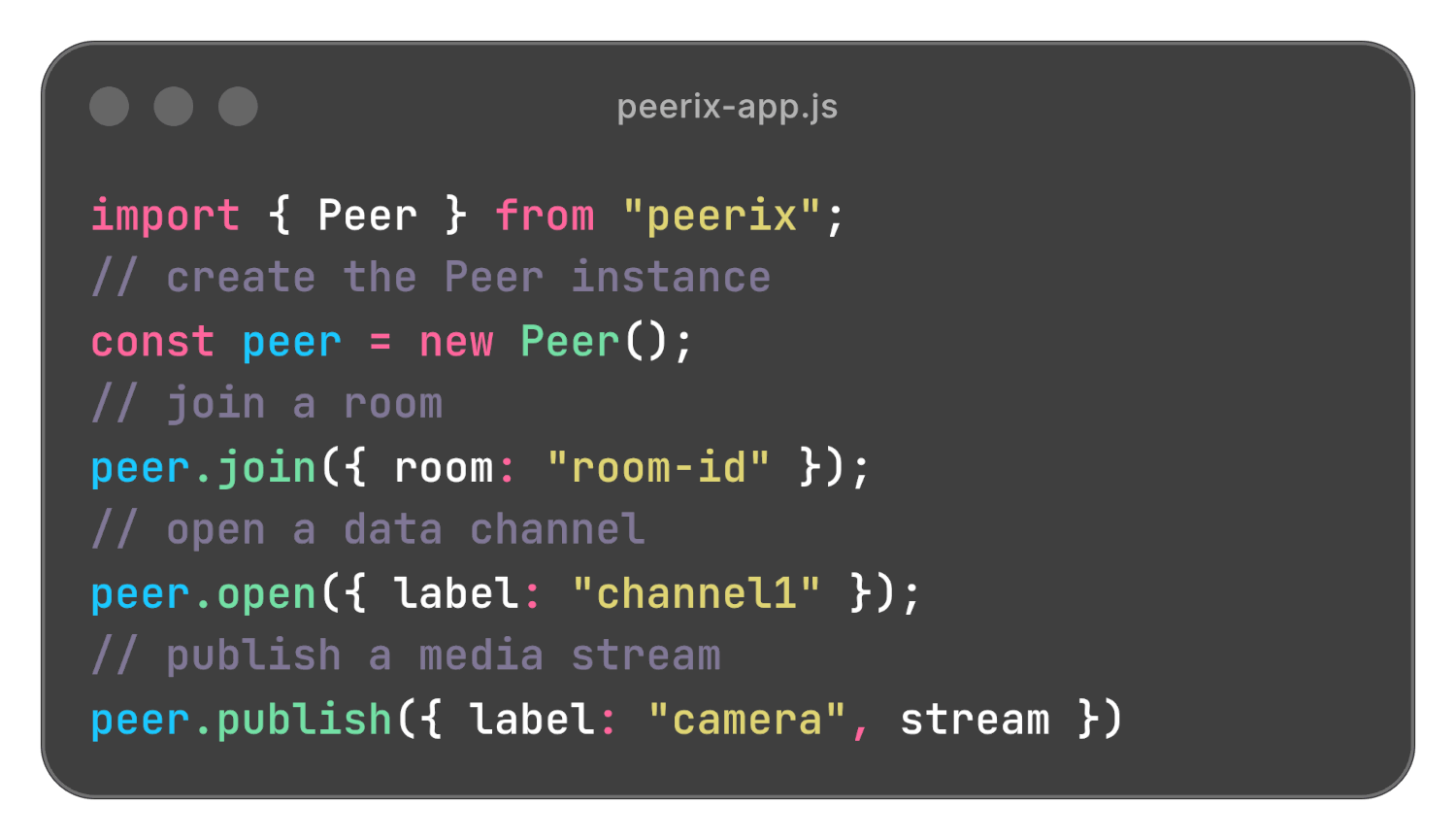
Provides a simple JS/TS API that abstracts away the complexities of WebRTC with signaling, negotiation, and state management.
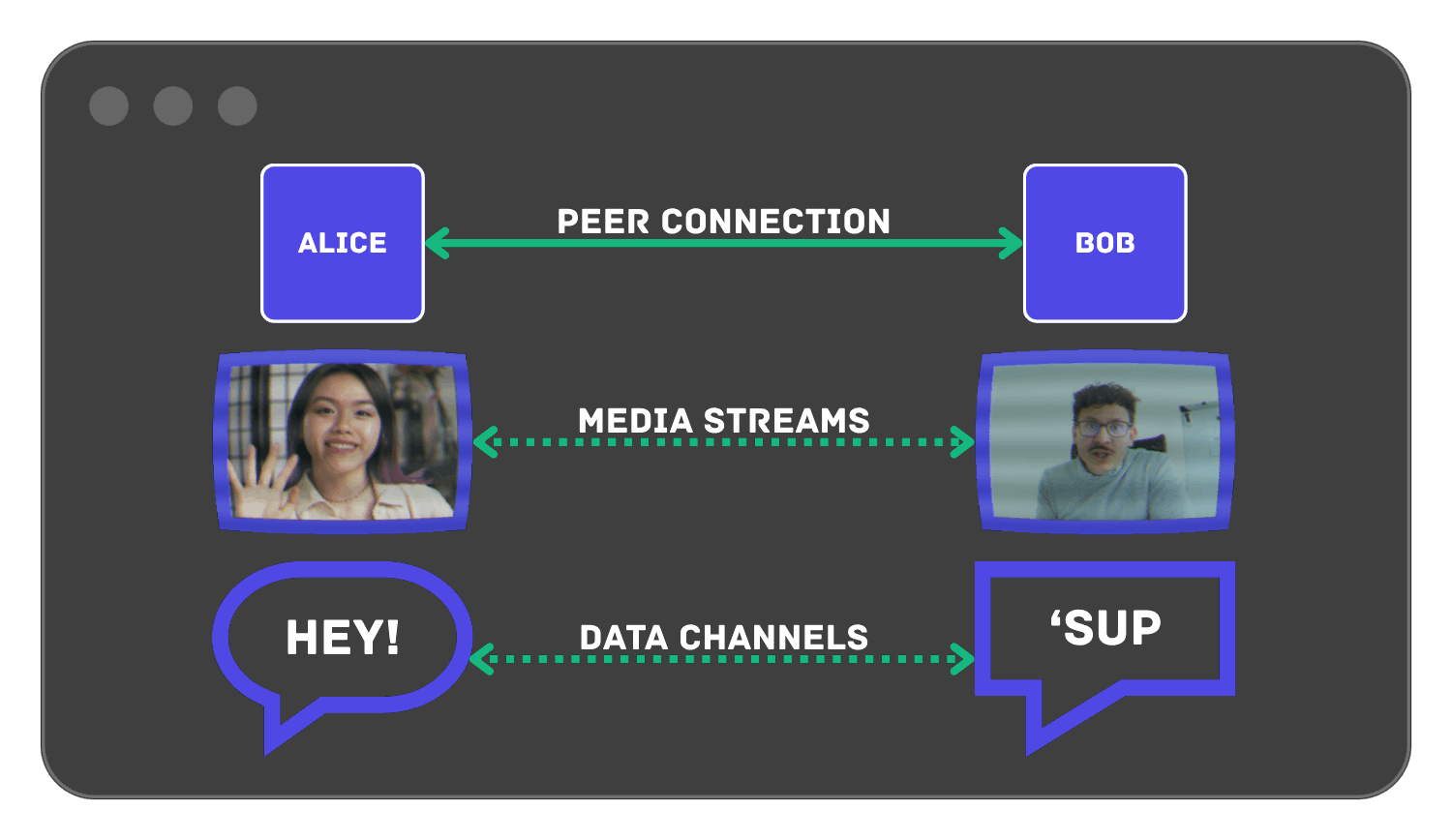
Single Peer Connection
Efficiently manage multiple data channels and media streams over a single peer connection, reducing overhead and improving performance.
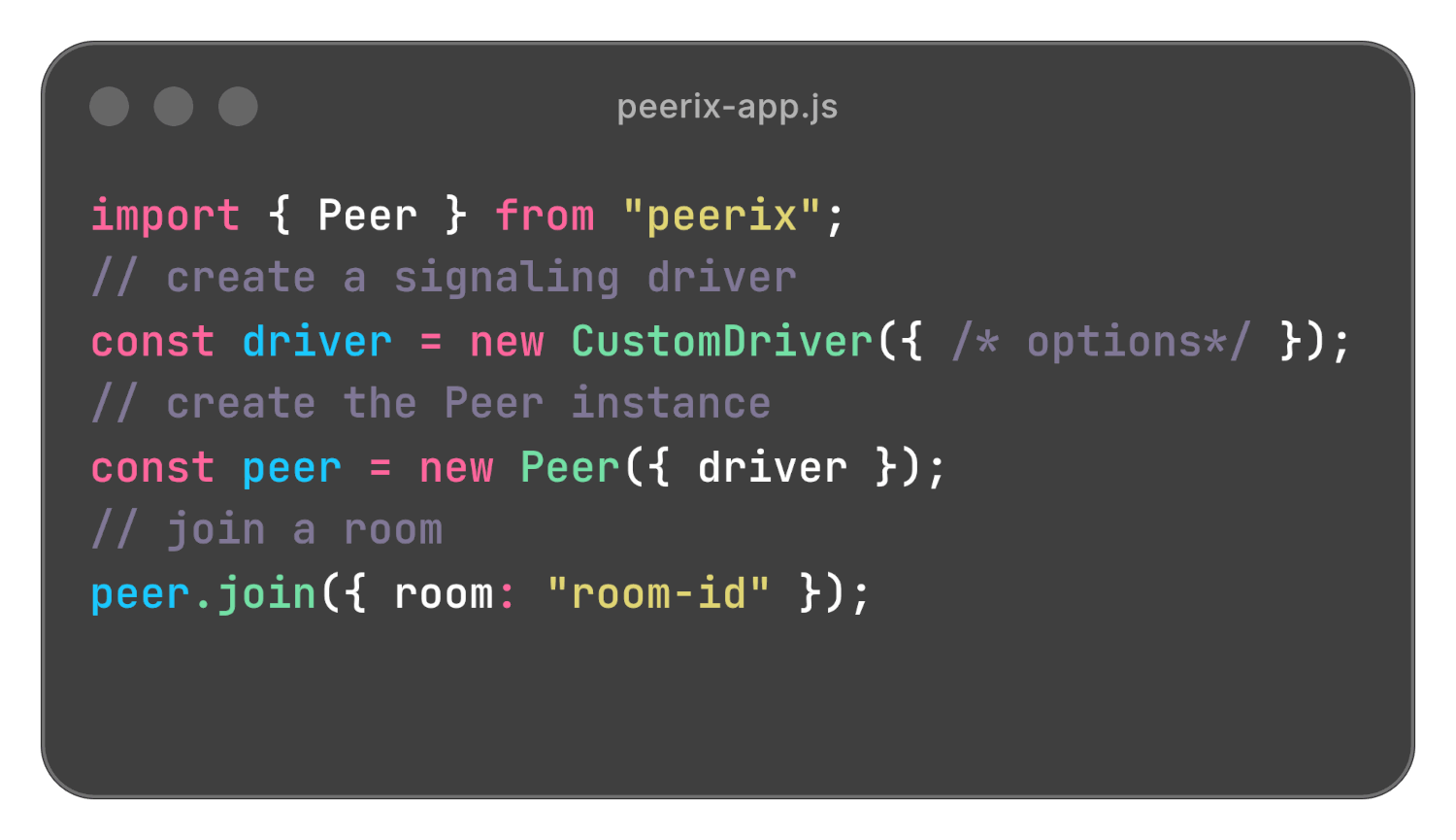
Transport agnostic
Designed to work with any signaling transport, use built-in drivers or implement your own custom driver.
All browser support
Works across all major browsers with automatic testing, ensuring your application reaches the widest audience possible.
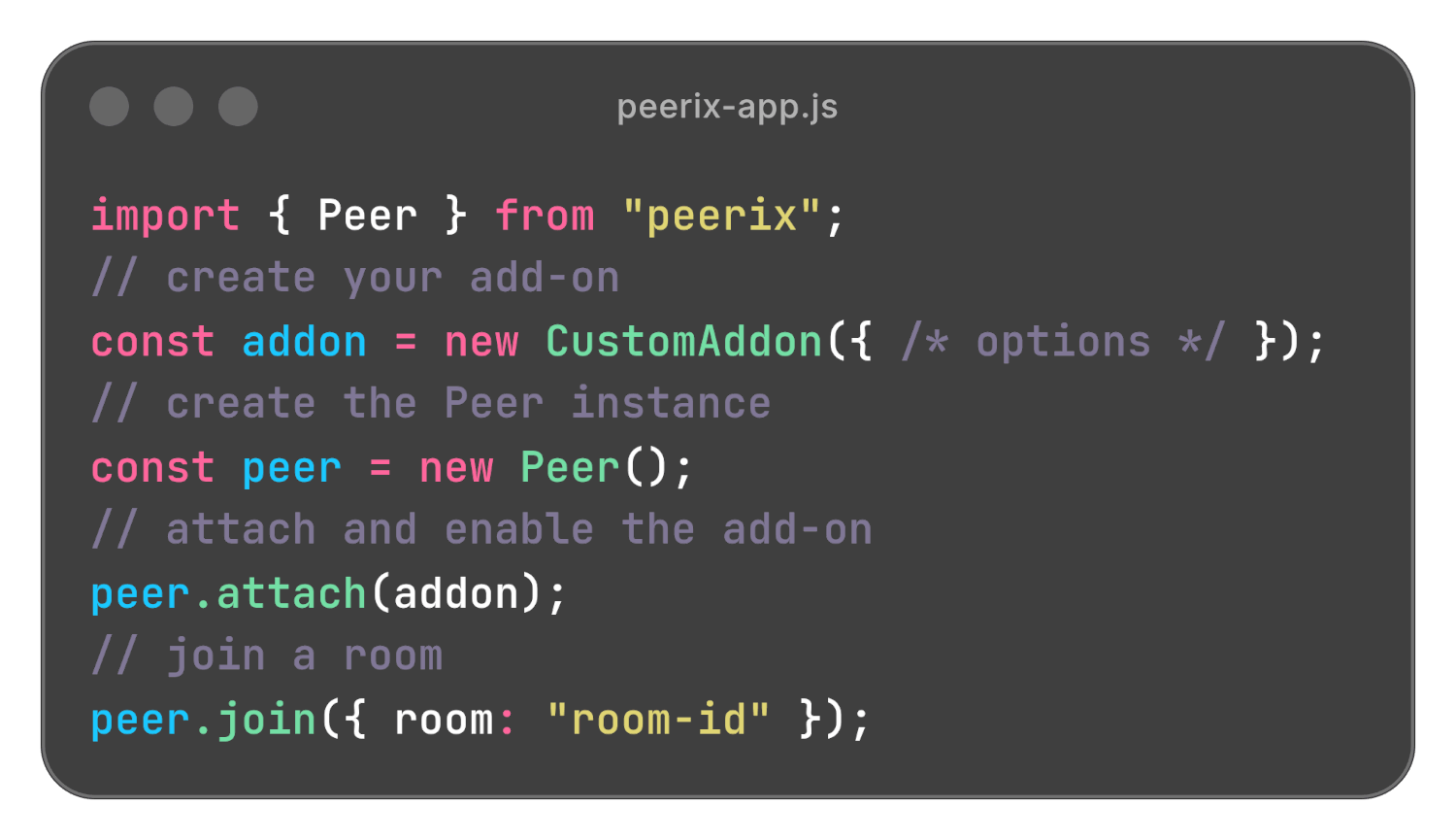
Customizable and Extensible
Easily extend and customize the library with add-ons to fit your specific needs.
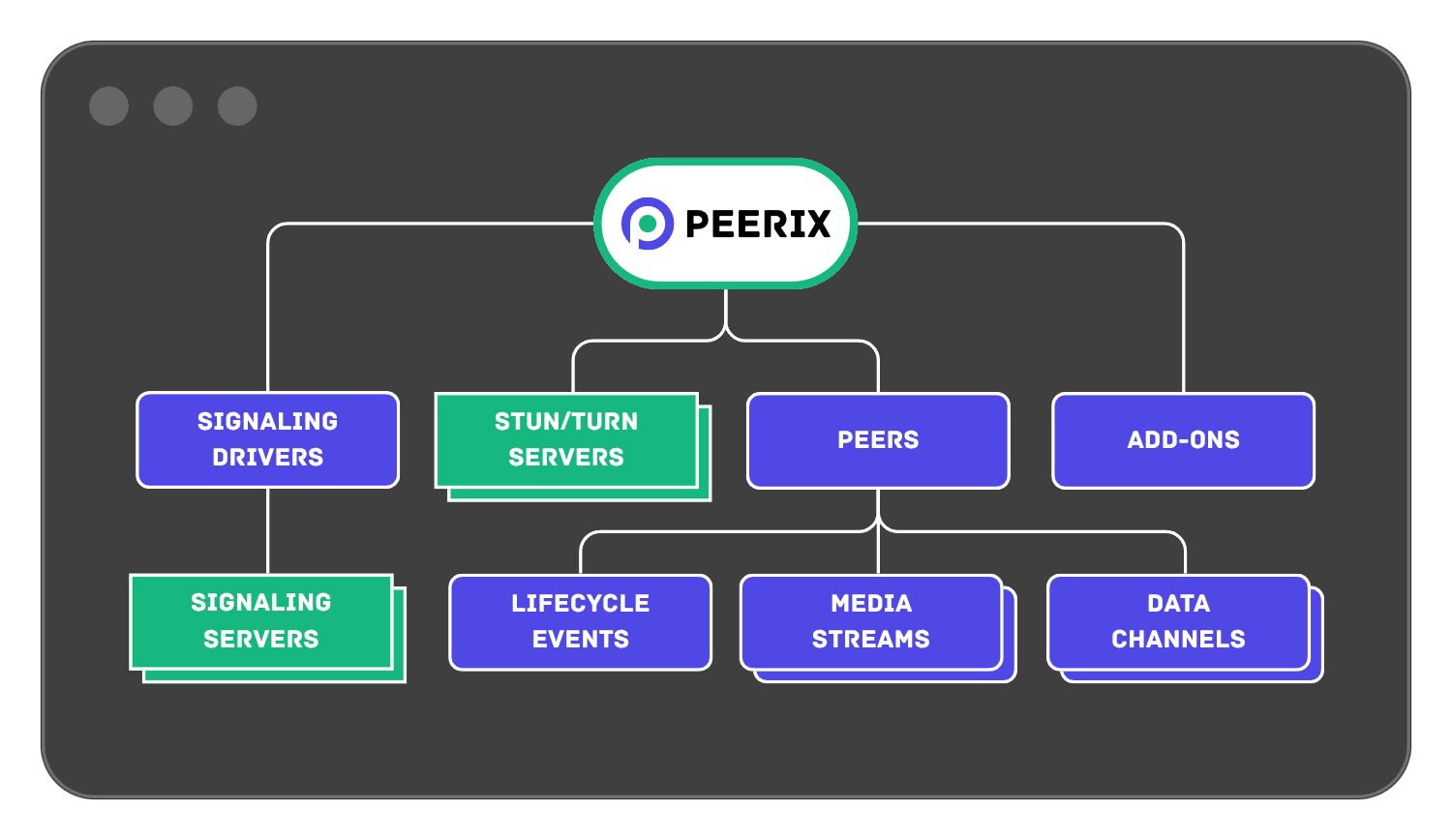
Self-hosted or Cloud-based
Deploy signaling and TURN servers on your own hosting or use cloud-based solution for reliable and scalable infrastructure.
Peerix in 1 minute
Frequently Asked Questions
What is Peerix?
A lightweight JavaScript/TypeScript library that simplifies WebRTC by handling signaling, NAT traversal, and connection state so you can build peer-to-peer apps faster.
Do I need a signaling server?
Yes — peers need signaling to discover each other; Peerix is transport-agnostic and supports drivers for different signaling backends. You can use built-in drivers or implement your own custom driver.
Is Peerix an SFU or MCU?
No — Peerix is not an SFU (Selective Forwarding Unit) or MCU (Multipoint Control Unit). It focuses on enabling direct peer-to-peer communication between clients, without server-side media processing or routing.
How does Peerix handle NAT and firewalls?
Peerix uses standard WebRTC techniques, such as ICE (Interactive Connectivity Establishment), STUN (Session Traversal Utilities for NAT), and TURN (Traversal Using Relays around NAT) servers, to handle NAT traversal and firewall restrictions, ensuring reliable peer-to-peer connections. You can specify public STUN servers or set up your own TURN server for better connectivity in restrictive network environments.
Can I self-host or use a cloud offering?
Both — documentation covers self-hosting your signaling/TURN infrastructure or using cloud hosting options.
Which browsers are supported?
Peerix targets all major browsers; the library and tests aim to ensure broad browser compatibility.
Is Peerix open source?
Peerix is an open-source project licensed under the Apache License, Version 2.0.